Two Grocery Trips, One Big Lesson About Running Your Business
Business Strategy, Operations, Small Business Growth
Two Grocery Trips, One Big Lesson About Running Your Business
If your business feels like a never-ending game of "What should I work on today?" - you're not alone. Most owners aren’t struggling because they’re lazy or unmotivated. They’re exhausted because they’re deciding from scratch every single day what to do next.
And the funny thing? Your internal strategy is a lot like weekly grocery shopping. There’s more than one way to do it - but only one way is actually intentional, efficient, and aligned with what you're trying to accomplish in your business.
Trip One

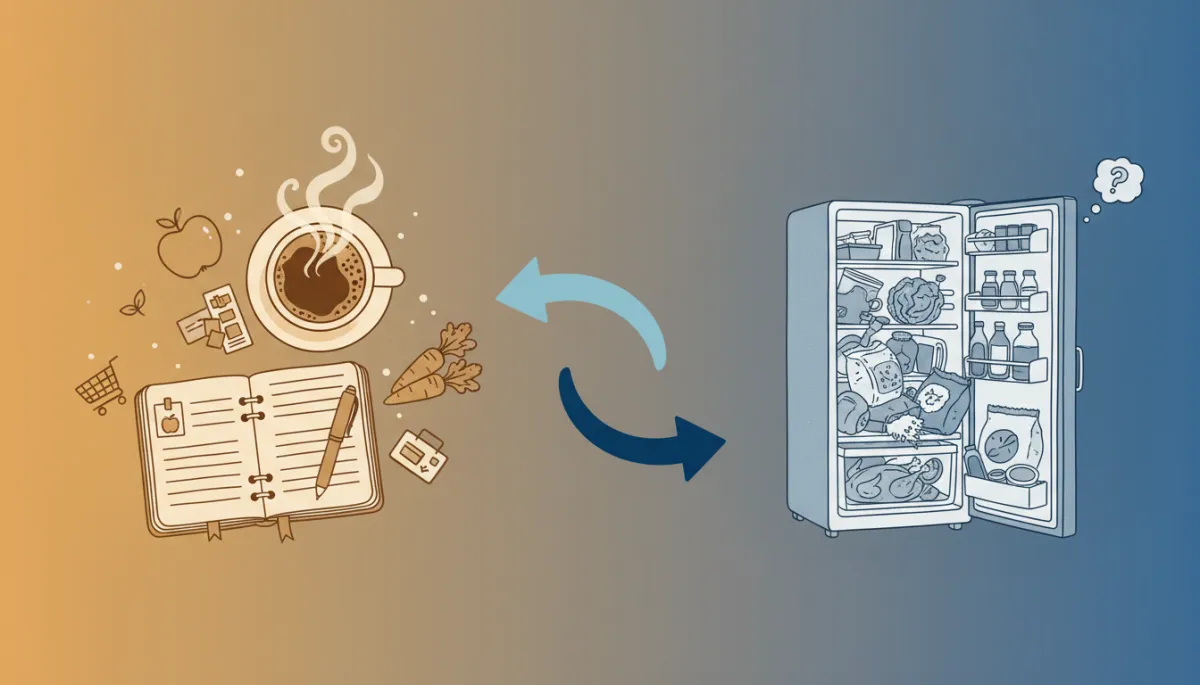
She sits down Sunday afternoon with a cup of coffee and picks out five dinners for the week. She checks what's already in the pantry, skims the sales ads, and builds a list around what's on sale and what she already has. Twenty minutes, one trip to the store, and she's done.
Monday through Friday, she already knows what's for dinner. No standing in front of the fridge at 5:30 wondering what she's got the energy to make. No decision fatigue. Dinner is already decided - she's just executing the plan.
💡 Pro Tip: Planning once for the week protects your energy every day. The same is true when you plan once for your quarter in business.
Trip Two

She grabs her wallet and heads to the store with no list and no plan. She walks the aisles picking up things that look good in the moment. A rotisserie chicken. Some peppers. A bag of rice. Nothing wrong with any of it - she just doesn't know yet what it's for.
By Wednesday, she's standing in front of an open fridge trying to make something out of ingredients that don't quite go together. It takes real mental energy every single night. By Sunday, half the produce has gone bad, and she's ordered takeout twice because she just couldn't face figuring it out again.
"Winging it feels flexible in the moment - but it quietly taxes your time, money, and energy all week long."
Same Ingredients, Completely Different Week
Here's the thing - both women went to the same store. Both spent roughly the same amount of money. One of them just decided first, and one of them decided daily.
Running a business works the exact same way.
Without a plan, every day becomes a decision-making marathon. What do we work on today? Who follows up with that lead? What's actually moving the needle versus what just feels urgent? You're standing in front of an open fridge every single morning, and by the end of the week you're exhausted, some opportunities have gone bad from neglect, and you've "eaten out" - outsourced, delayed, or just skipped - the things that actually needed your attention.
With a plan, you already know what today is for. You're not deciding - you're executing.
📌 Key Takeaway: Same resources, same effort - but a clear strategy turns scattered activity into consistent, measurable progress.
That's what growth and operations consulting really is. It's not someone doing the work for you. It's sitting down with someone who helps you build the list, check the "sales ads," and map the week - so you walk into every day already knowing what's for dinner.
The 5-Step Grocery-to-Growth Framework
1. What's the end goal?
Before any list gets built, decide what you're actually feeding. A family of four for a week looks different than meal-prepping for one. In business: what are you actually building toward - more revenue, more time back, a business that runs without you? You can't plan a trip without knowing the destination.
2. What do you already have?
Check the pantry before you shop. What systems, people, and tools are already in place? Most businesses are sitting on more than they realize - an underused CRM, a team member ready for more responsibility, a process that just needs tightening instead of replacing.
3. What's actually worth your investment?
Look at the sales ads. Where's the leverage right now? Not everything deserves equal time and money. A real plan prioritizes the moves that give you the best return this season, not just the ones that feel most urgent.
4. Build the list.
Turn the goal and the inventory into a specific, written plan - recipes chosen, ingredients listed, week mapped. In business, this is the actual strategy: the priorities, the timeline, the who's-doing-what. Vague intentions don't make it out of the store; specific lists do.
5. Shop the plan, not the moment.
Now you go execute - and because you already decided, you're not standing in the aisle (or the office) every day making it up as you go. You're just following through.
Decide once, execute daily - protect your focus and reduce decision fatigue.
Align tasks to goals - every "ingredient" in your business has a purpose.
Use what you already own - people, processes, and platforms before you "buy more groceries."
The Real Cost of Skipping the List
The second grocery trip doesn't fail because the person made bad choices in the moment. It fails because there was no plan for those choices to serve. Same with business. Most owners aren't working ON their business poorly - they're working IN it without ever having sat down to build the list.
That's the whole difference between a business that runs you and a business you run with intention. Both take effort. Only one of them takes less energy every single day after the planning is done.
⚠️ Warning: If you constantly feel behind, reactive, or scattered, it's usually not a capacity problem - it's a planning and operations problem.
Ready to sit down and build your list? A discovery call is where that planning starts - no pressure, just a real conversation about what your business actually needs right now to grow. Head to myinservice.com to grab a time.