Guide to Automating Small Business Workflows with AI
Business Process Automation, SMBs, AI, Workflow Optimization
Top 5 Process Automations for Small Businesses
Business process automation is no longer a nice‑to‑have for small and midsize businesses—it is a strategic requirement for staying competitive, profitable, and resilient. This guide explains how SMBs can use automation and AI tools to streamline workflows, improve ROI, and build an operations foundation that scales with growth—starting with the five highest‑impact processes to automate first.
Why Business Process Automation Matters Now for SMBs
SMBs operate with tight margins, lean teams, and constant pressure to do more with less. Every manual task—copying data between systems, chasing approvals, updating spreadsheets—quietly erodes profitability. Business process automation addresses this directly by replacing repetitive, rules‑based work with reliable, scalable workflows that run in the background while your team focuses on higher‑value activities.
When implemented correctly, automation does more than “save time.” It standardizes how work gets done, reduces errors, and creates visibility into your operations. For SMBs, that means fewer dropped balls, faster cycle times, and a foundation for sustainable growth rather than constant firefighting.
📌 Key Takeaway: The best automation targets repeatable, rules‑based work that drains your team’s time but doesn’t require their creativity.
Top 5 Process Automations for Small Businesses
Not every process should be automated on day one. The most effective SMB automation programs start with a small set of workflows that are:
High volume — repeated many times per day or week.
Rules‑based — clear inputs, steps, and outcomes.
Business‑critical — directly tied to revenue, customer experience, or compliance.
Lead Intake and Qualification — Automatically capture leads from web forms, ads, and email, enrich them with context, route them to the right owner, and trigger timely follow‑ups.
Client Onboarding — Standardize welcome emails, document collection, account setup, and kickoff scheduling so every new customer gets a consistent, professional experience.
Quote‑to‑Cash Workflow — Connect quoting, approvals, e‑signatures, invoicing, and payment reminders into a single streamlined flow that accelerates revenue.
Service Ticket Routing and Updates — Log support requests automatically, prioritize them based on rules or SLAs, assign owners, and keep customers informed without manual chasing.
Recurring Reporting and Dashboards — Pull data from your core systems on a schedule, generate standardized reports, and deliver them to stakeholders so decisions are based on current information.
Common starting points include lead intake and qualification, client onboarding, quote‑to‑cash workflows, service ticket routing, and recurring reporting. Inservice works with SMBs to map these processes step‑by‑step, identify bottlenecks, and design automation that reflects how your business actually operates—not how software assumes it should operate.
💡 Pro Tip: Start with one or two of these five workflows, prove the value, then expand automation once your team trusts the system.
How AI Tools Elevate Traditional Automation
Classic business process automation excels at predictable, repeatable tasks. AI tools extend that capability into areas that used to require human judgment—reading unstructured content, summarizing conversations, or making recommendations based on patterns in your data. For SMBs, this combination is powerful: structured workflows handle the “plumbing,” while AI adds intelligence at key decision points.
With Inservice, AI can classify incoming emails, draft responses, enrich CRM records, prioritize tickets based on sentiment, or surface the next best action for your team. The result is not a replacement for your staff but an upgrade to their daily toolkit—less copy‑paste, more strategic work, and faster, more consistent responses to customers and partners.
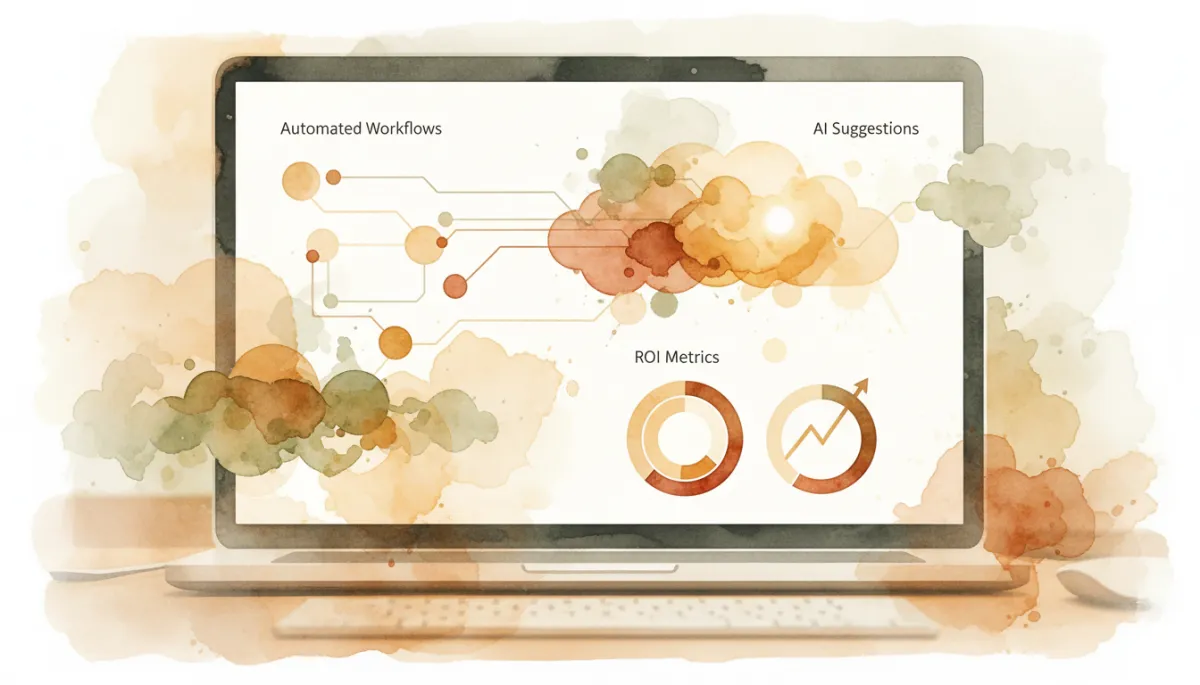
Centralized automation dashboards reveal where AI and workflows deliver the strongest returns.
Measuring ROI: Turning Automation into a Strategic Asset
Automation initiatives must be justified in business terms. For SMBs, that means tying every workflow to clear ROI metrics—time saved, errors reduced, revenue accelerated, or risk mitigated. A disciplined approach prevents “automation for automation’s sake” and ensures that each project contributes to the bottom line.
Cost savings — hours reclaimed from manual work, overtime avoided, rework reduced.
Revenue impact — faster lead response, shorter sales cycles, higher conversion rates.
Risk and quality — fewer compliance issues, consistent execution, better customer satisfaction.
Inservice helps you establish these baselines before any automation goes live, then tracks performance over time. This data‑driven view of ROI makes it easier to prioritize the next wave of workflows, secure stakeholder buy‑in, and treat automation as an ongoing capability rather than a one‑off project.
Workflow Optimization: Designing Systems That Scale with Your Business
Effective business process automation is not only about technology—it is about workflow optimization. The most successful SMBs use automation as an opportunity to clarify ownership, eliminate unnecessary steps, and standardize best practices across teams. That discipline turns fragmented, person‑dependent processes into scalable systems that can support growth without adding proportional headcount.
Inservice approaches every engagement with this mindset. We map your current state, design an optimized future state, then implement automation and AI tools that align with your systems, your people, and your customers. The outcome is a streamlined operation that feels lighter, faster, and more predictable—without sacrificing control or oversight.
Next Step: Explore What Automation Could Do for Your SMB
If your team is spending too much time on manual tasks, chasing status updates, or stitching together disconnected tools, you are leaving value on the table. Business process automation—enhanced by practical AI tools—gives SMBs a direct path to higher ROI, optimized workflows, and a more resilient operating model.
Inservice specializes in helping small and midsize businesses design, implement, and scale automation that fits their reality. To understand what this could look like for your organization, learn more and book a discovery call at myinservice.com. In one focused conversation, we will identify your highest‑value automation opportunities and outline a clear, actionable path forward.